The land
The last range
before the sea
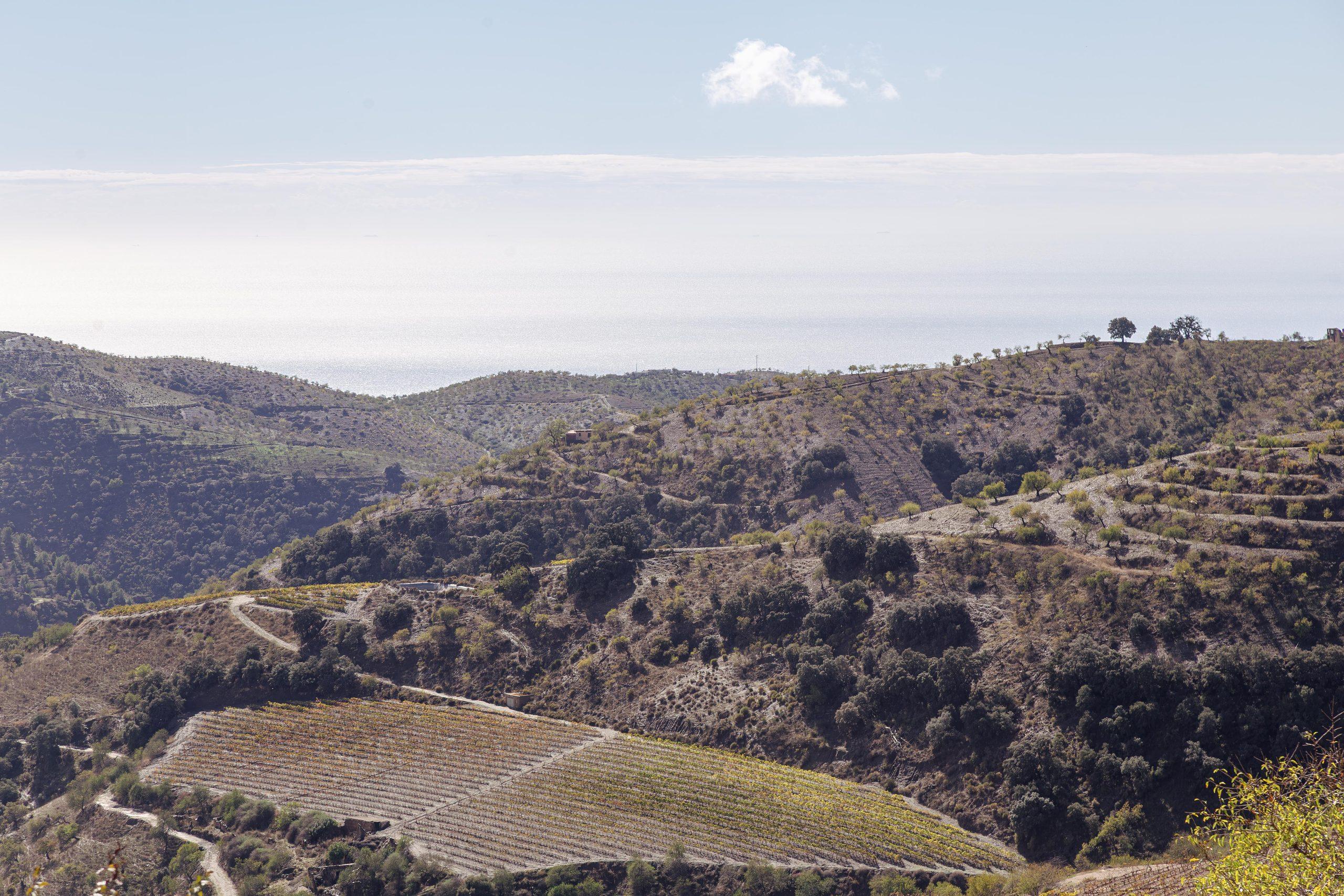
The mountain wall between the Sierra Nevada and the Mediterranean: slate, almond trees and high-altitude vineyards.
The name
The range of the Coast
Before it was the Contraviesa, this range was the sierra del Cehel, from the Arabic sāḥil, “the coast”. The mountains of the coastal wine were literally named the mountains of the Coast, back when Murtas belonged to a Nasrid district and the sea was the region’s highway.
You can see the Mediterranean from the vines. The evening mists that climb from it bring moisture to the vines. At Cuatro Vientos, supplementary irrigation is also used when needed. In clear weather, Africa closes the horizon.
18th-19th century
A wine that once sailed
Two centuries ago these slopes were one of Spain’s great vineyards: chronicles speak of a hundred thousand arrobas of wine a year, shipped from the beaches of La Rábita to Gibraltar and northern Europe, with the mountain’s brandies travelling to Jerez. Thirty distilleries worked at once.
1890
Phylloxera and the long silence
The phylloxera plague wiped out the vineyard almost entirely. A century of emigration and empty farmhouses followed. Of the tens of thousands of hectares, some five hundred survive today, every one of them a survivor. Three things came through the disaster: the slate, the altitude, and a white grape called Vijiriega, which today grows only in Granada and the Canary Islands.
The soil
Born on slate, raised under slate
The bedrock here is launa, grey, layered slate-clay of the same family as Priorat’s famous llicorella. It drains the vineyard, and it also waterproofs the flat roofs of the Alpujarra’s white villages. Few wines in the world sleep under the same stone they were born on.
The altitude
Vineyards reaching 1,300 metres
Our vineyards reach 1,300 metres, among mainland Spain’s highest vineyard elevations. The sun on the hillsides ripens the fruit, while cooler nights help slow ripening and preserve the grapes’ natural acidity. That balance is part of what gives the wines their freshness.

From the snow to the sea
The Sierra Nevada seen from the hill. At your back, the Mediterranean.
Since 2018
D.O.P. Granada
Granada’s wine recovered its own name in 2018 with the Denominación de Origen. Our house, among the appellation’s original champions, makes its leading ranges under the Contraviesa-Alpujarra subzone, while 4V is protected by the I.G.P. Cumbres del Guadalfeo.